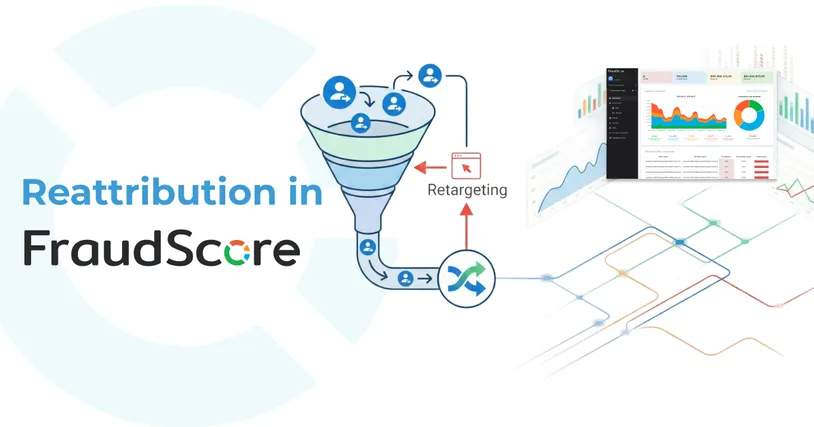
Retargeting has long been a staple of mobile advertising strategies. It re-engages users, boosts retention, and drives conversions. Yet it introduces a new attribution challenge: accurately accounting for returning users.
To help marketers analyze these cases more precisely, FraudScore now supports reattribution. The system detects and evaluates user returns via retargeting campaigns.
What Is Reattribution?
Reattribution occurs when a user reopens an app due to a retargeting campaign. This happens in two main ways:
- Reinstallation
The user deletes and reinstalls the app on the same device.
- Return after inactivity
The user relaunches the app after a period of dormancy.
The reinstall source may differ from the original. For instance, a user might arrive organically first, then return via paid ads a month later — in which case the reattribution source is the retargeting campaign.
Why It Matters
Ignoring reattribution can inflate campaign performance. Excluding retargeting returns risks:
- Overstating new user metrics
- Misallocating budgets across channels
- Missing overlaps between acquisition and retargeting audiences
- Complicating fraud analysis, as fraudsters often mimic reinstalls
Reattribution separates new from returning users, revealing the true user journey.
How FraudScore Implements It
FraudScore pulls data from partner MMPs like AppsFlyer, Adjust, or AppMetrica. If an MMP flags an event as reattribution (e.g., reinstall or post-inactivity return), FraudScore logs it in a dedicated report, distinguishing initial installs from reattributions.
For each event, the system checks the click or impression source, allows multiple reattributions per device, and respects client-defined reattribution windows — 7 or 30 days, or custom periods tailored to business models like gaming, e-commerce, or fintech.
Benefits for Fraud Prevention
Reattribution support sharpens FraudScore’s antifraud tools, enabling:
- Differentiation of genuine returns from fakes
- Precise retargeting campaign ROI
- Analysis of repeat returns
- Quality comparisons across retargeting channels
This counters fraudsters increasingly exploiting retargeting for bogus events.
Adding reattribution to FraudScore boosts measurement transparency. Advertisers now track not just who installs, but who returns, when, and why — optimizing budgets, refining analytics, and fortifying campaigns against fraud.